Every thrift store in America has the same rack. Somewhere past the windbreakers, there's a wall of blue — forty, sixty, a hundred pairs of Levi's crammed hanger to hanger, smelling faintly of dust and other people's laundry detergent. Pulling a pair out is a full-body effort. Most of them are nothing. And then, maybe once a trip, one comes off the rack with real weight to it, and the denim doesn't flop — it folds, like paper stock, like it has opinions.
Levi's is the most re-sold denim brand on earth, which is exactly why buying a pair secondhand is a coin flip unless you know what you're holding. Here's what we look at, in the order we look at it.
Fading is a biography
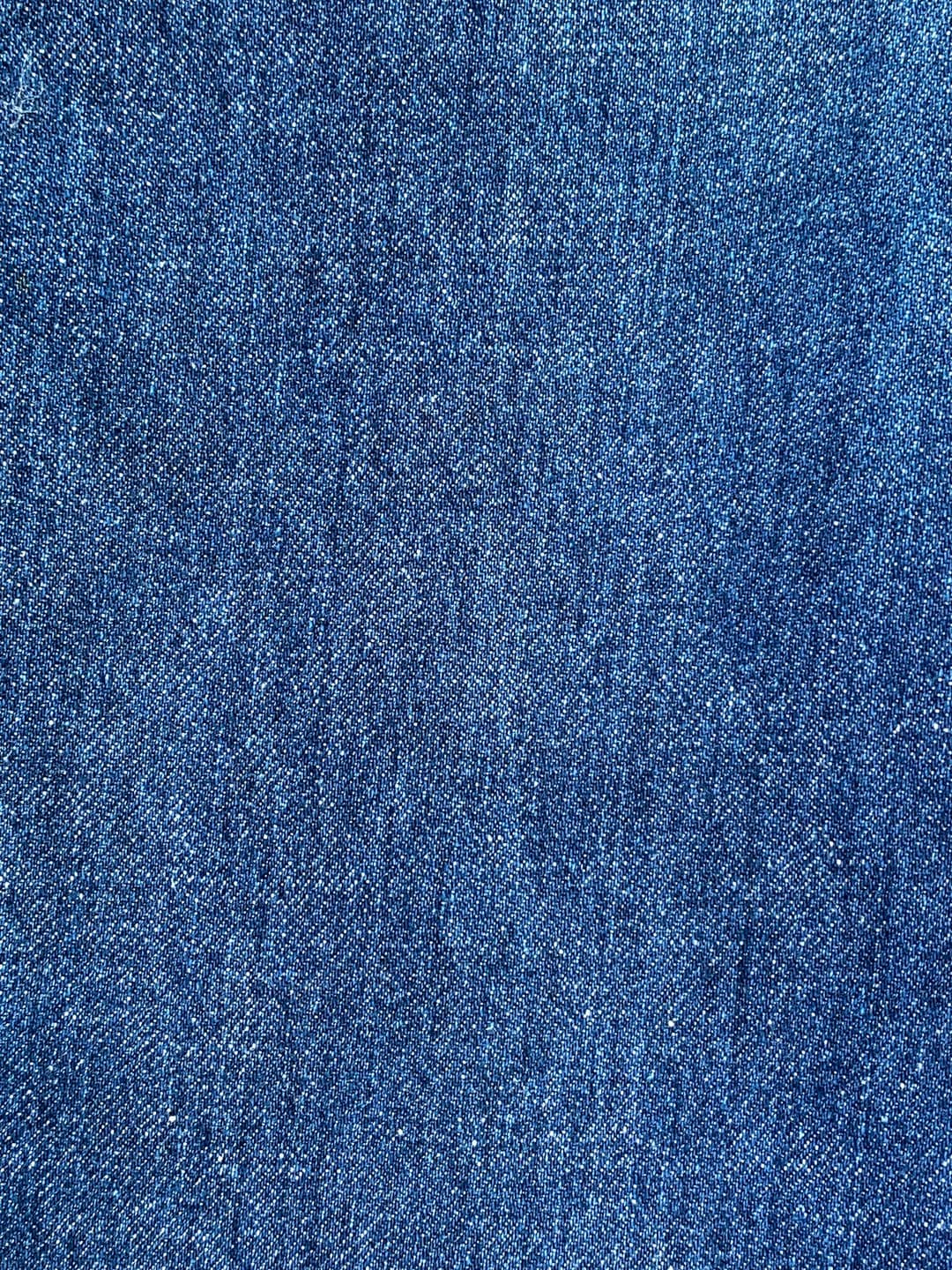
Turn the jeans toward the light and read them. A pair somebody actually wore for years fades unevenly, because bodies are uneven. There's lift at the thighs where the fabric sat over muscle, a pale bloom at the knees from a decade of bending down, a worn ghost where a wallet lived in the back pocket.
The faint horizontal creases fanning out from the hips have a name — whiskering. The web of crosshatched lines behind the knees are honeycombs. Both are the denim remembering a specific person's specific way of moving.
Now compare that to a pair that's the same shade of pale everywhere at once, with fade lines that look painted on because they were. That's chemical distressing, done at the factory. It isn't a defect and it isn't a scam — a lot of great jeans are made that way on purpose. It's just worth knowing whether you're paying vintage-wear prices for a wash that came out of a tumbler in 2019.
The line inside the cuff
Roll one leg up and look at the outseam. If there's a tight, clean, self-finished edge running down it — often with a colored thread, classically red — you've got selvedge. That edge is the loom's own finished border, produced by an old-style shuttle loom that weaves a narrower, denser bolt of fabric and doesn't leave a raw side to be overlocked shut.
It's a genuine mark of a higher construction standard, and the market prices it accordingly. Selvedge pairs command real money, sometimes several times what an identical-looking non-selvedge pair brings.
But here's the unglamorous truth: selvedge is not automatically better for wearing around. It's a different fabric with a different character — often heavier, stiffer at the start, slower to break in, more dramatic in how it fades. Some people love that. Some people want jeans that feel good on day one. Neither is wrong. Just know which one you're buying, and don't pay the premium if the thing you actually wanted was comfortable pants.
The waist tag is a suggestion
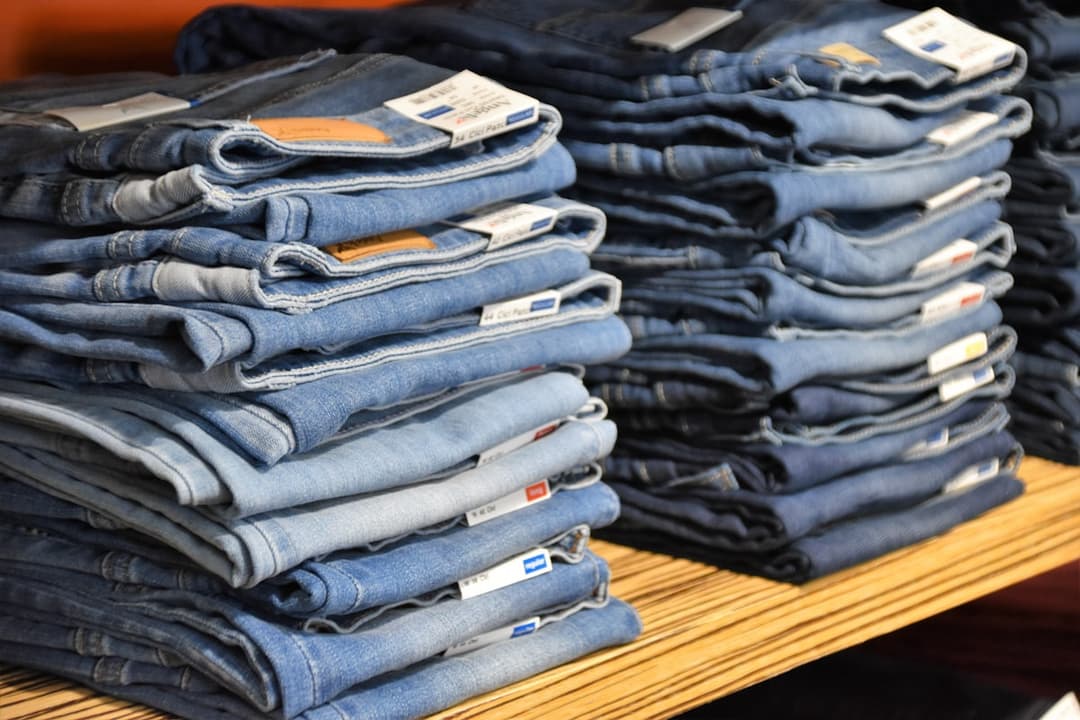
This is where more people get burned than anywhere else. A vintage 501 marked 32 and a 501 you'd buy new today marked 32 can fit like different garments entirely. Vintage pairs were often sized to be worn at the natural waist with a higher rise; the modern cut sits lower, and the number on the tag has been quietly negotiated over the decades.
Then there's shrinkage. Older pairs were frequently sold unwashed, sized to shrink down to their real dimensions after the first hot wash — meaning the tag reflects what the fabric was, not what the jeans are now. And a pair that's been through twenty years of somebody else's dryer has already done all its shrinking, in whatever direction it felt like.
So ignore the number and get the measurements laid flat: waist across the top, inseam, rise from crotch seam to top of the waistband. Compare those against a pair you already own and love. That's the only comparison that's ever told anyone the truth.
Reading the paperwork
The last thing we check is the small stuff, because it's how you date a pair. The red tab is the fastest clue: capital-E "LEVI'S" tabs are the old ones, small-e came later, and a tab with printing on only one side tells a different story than one printed on both. The arcuate — the double curve stitched across each back pocket — has shifted in shape and thread over the decades. The leather patch, when it hasn't been shredded by a dryer, carries the two horses, the lot number, and often the factory information.
None of this matters if you just want jeans that fit. Wear them; they don't care what year they're from.
But if you're paying a premium specifically for age, ask the seller for close photos of all three before you buy — tab, arcuate, patch. It takes them ninety seconds. We keep those shots on file for exactly this reason, because the difference between a nice old pair of jeans and a genuinely collectible one is usually about a half inch of stitching.